
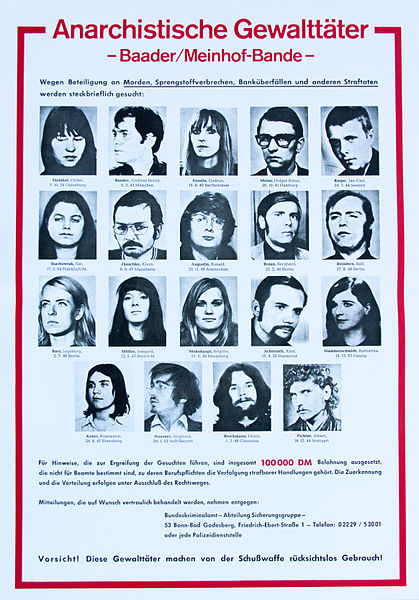
The background to explain my reasoning of writing this more direct political piece can be summarised through the last weeks and months of the German political discourse. The small village known as Luetzerath will be laid waste by an energy company for the extraction of coal. A deal which was made possible with the assistance of the Green Party which co-governs the state of North Rhine Westphalia where Luezterath is located. Climate protest has become vociferous in Germany, due to what protesters view as inaction by the federal and local governments to impose more serious climate protection policies. One of those groups call themselves the ‘Letzte Generation’ or ‘Last Generation’, a group which has been extremely divisive in the national discourse. Mainly because they have engaged in questionable means of civil unrest. They have blocked traffic by gluing themselves to the street and thrown food scraps at Monet paintings. In particularly conservative voices have called them: ‘climate extremist’, ‘climate terrorist’, ‘climate RAF’, and ‘enemy of democracy’. In particular the term ‘RAF’ has found warmth in the circles of conservative politicians and pundits. ‘RAF’ refers to the ‘Red Army Faction’, a group also known as the Baader Meinhof Gang became notorious in post-World War II German history. People who lived throughout the 1970s can remember acts of arson, kidnappings and murder committed by the gang. With the use of violence, the RAF hoped to provoke the German mass towards revolution against the state. Though personally I find these comparisons to be cheap and populist distractions, I have begun to ask myself the question: are there perhaps some parallels? Why do they exist? And what can we learn from them. To hopefully encourage debate, and not engage in diplomatic isolation.
First, let’s define what ‘RAF’ means, to those who are unfamiliar with the term. The ‘Red Army Faction’, otherwise known as the Baader-Meinhof Gang were an organisation of political extremists who have engaged in various acts of terrorism throughout the 1970s. They claimed to have been run by collective leadership. However multiple accounts have made it clear that the group was run by the couple Andreas Baader and Gudrun Ensslin. Baader was an erratic daredevil, who had no problem engaging in any form of violence to achieve his own goal. Ensslin was sharp with words and could psychologically torture her inferiors simply with what she said. This was particularly applicable to the journalist Ulrike Meinhof, who although was a founding member of the group, became more alienated by Baader’s and Ensslin’s behaviour. The group started in the early 1970s, attacking the American air bases stationed in West-Germany. Arguing that these attacks were carried out in solidarity with the people of Vietnam, who were killed by the same planes stationed at those bases. The trio was eventually caught and sentenced. But that did not end the attacks, on the contrary, they became more extreme. A group of sympathisers, known as the ‘second generation’ began to kidnap and murder high representatives of the economy and the state. All with the intention to free Baader, Meinhof and Ensslin from prison. This culminated in the capturing of a Lufthansa plane, which held eighty-eight passengers. Just this act alone risked the lives of dozens of innocent civilians. Once this attempt was foiled, the remainder of the original crew (including Baader and Ensslin) took their own lives in prison. This era of terror remains relevant in German society to this very day. It raised questions on security, and how politics can and should respond to terrorism. The RAF also has a continuing legacy through the production of tv-shows, films, literature (and blog entries). The legacy of the RAF is rich with fear and terror, which certain political actors enjoy referring back to, in order to condemn today’s climate activists.
Although the comparison between the Baader Meinhof Gang and the ‘Last Generation’ may be preposterous, there are perhaps some interesting parallels during their origin phases. Just like France, the United States and Czech-Slovakia, West-Germany had a lively student movement by the time of the late 1960s. This movement of protesters took inspiration from France’s cultural revolution, as well as the US’ Civil Rights movement, and the anti-Vietnam war protests. The students protested against America’s war in Vietnam, as well as the fact that American war jets were stationed in West-Germany. Jets that were used to kill civilians in Vietnam. The protesters believed that their government was complicit in war crimes. When keeping in mind the atrocities which were deliberately carried out (i.e., Agent Orange), one can conclude that the students had a point. What’s important to note, is that the students had sympathy throughout the country, despite efforts made by the conservative (and former Nazi) Chancellor Kiesinger, and his allies in the right-wing press. his sympathy from the German population helped oust the conservative Christian Democrats, who have governed West-Germany since the formation of the Republic. For the first time in over forty years the Social Democrats returned to lead the government under Chancellor Willy Brandt. This parallel can be drawn to contemporary German politics as well. Fridays For Future has provoked the political discourse and drew broad sympathy throughout the country. They also called out the government’s inaction on addressing the climate crisis. So much so that after sixteen years of governance, the Christian Democrats were ousted yet again. Finally, the Green Party, which for some became the unofficial political wing of the Fridays for Future movement got a seat at the cabinet. Not only did history show parallels here, but also in the response of conservatives as they entered opposition.
What’s important to note, is that both the student movement, and Fridays for Future shared broad sympathy across Germany. To crush this broad sympathy, the conservative media pundits needed a distraction. This is where groups like the ‘Last Generation’ come into play. I don’t think I need to elaborate that there are major differences between these climate activists, and literal terrorists who killed civilians.
However due to their existence, both become perfect ally of the right-wing press, by representing the very fear which they wanted to install within the population. From this point, if anyone dares to critique the political status quo, they can be brandmarked as a supporter of extremism.
If someone accused, the West-German government of not doing enough to address the war crimes committed in Vietnam, they were considered are RAF sympathisers. If today someone critiques either the federal or local government of continuing the corrosive coal industry, they are considered extremists. Dissenters want to ‘impose their will’ upon a majority that ‘rejects their extremism’. This is a cunning tactic because it allows the right-wing press to smear dissenters as ‘extremists’, but also to paint themselves as ‘fighters for the people’. In this case the genuine danger caused by the group is irrelevant, as long as they serve their given purpose. To distract from the genuine issues and questions that a population of socially aware people may want to raise.
All of this fear mongering is supposed to prevent a genuine discussion among the population. How can it be that despite the Green Party’s participation in the federal government, Germany is still not abiding the standards of the Paris Climate Accord. Such discussions don’t even have to be divisive, indeed they can be productive. A policy that has support from across the entire political spectrum, from left to right is a speed limit (yes for non-German readers, Germany doesn’t have a federal speed limit). Studies have also shown that passing a speed limit would drastically reduce CO2 emissions. So, to ask for a speed limit is not ‘imposing the will of the minority onto the majority’, it is the will of the majority. Yet this new government of ‘progress’ will not pursue such a policy. If one is to ask the simple question: why? Government officials will struggle to give a satisfying answer. Two of the governing parties: the Social Democrats, and the Greens support a speed limit. Merely the neoliberal, pro-business Free Democratic Party is radically opposed to such a solution. Party leader and Finance Minister Christian Lindner likes to dodge answering the question to justify his opposition. The only relevant groups which oppose a speed limit is the automobile lobby. A lobby which happens to fund and support the campaigns of the Free Democratic Party. Could this be the reason why Lindner and the Free Democrats fight the speed limit? Could it also be that maybe the Free Democrats are indeed ‘pushing the will of the minority onto the majority’? Judging by the
popularity of such a policy, and the necessity of lowering carbon emissions, to save the planet, one could certainly come to this conclusion.
So, could it be that the ‘Last Generation’ could be an unwilling accomplice of the political establishment to prevent a necessary discussion about climate measures? Certainly, they have dominated the media discourse throughout the last few weeks. Journalists have fear mongered about an apparent rise of ‘climate terrorism’, and how the democratic order will be inverted by this group. The result of this is that the majority of population will be busier discussing the value or danger of such a group. Instead of looking at what’s right in front of them. The actions, or more or less the inaction of the government. A government that halts popular measures and policies that could contribute much to the fight against climate change. All because a group of radical lobbyists and neoliberals have bought their share of influence in the government. ‘Last Generation’ removes the populations’ eye away from those who have power and responsibility. To prevent the asking of necessary questions, and the application of stronger political pressure. But that being said, I am just a crazy leftist, who wants to overthrow the German system, to impose a Stalinist Soviet patriotism.
Last Generation: The fabrication of extremism
19/12/2022